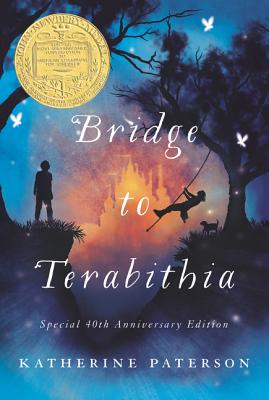
Paterson, K. (1977). Bridge to Terabithia. New York, NY: HarperCollins.
Age: 12 & Older; Grade: 6-8; Lexile Measure 810L; Genre: Fiction
Response
Bridge to Terabithia is an emotional and inspiring coming-of-age novel that promotes following your dreams, being oneself, making close friends, and how to overcome the struggles of growing-up. Even with all of these positive messages and themes, the book has been challenged and banned due to profanity, the promotion of witchcraft, violence, and the negative portrayal of religion. The reasons for banning this book seem ridiculous while you read the story. This novel has much to offer the young reader and should not be banned from any reading list. The friendship between Jesse and Leslie is captivating and relatable. Gender-roles are questioned and broken- down, which is a relief to read in a novel written over 40 years ago. I believe the so-called witchcraft would be considered fantasy and childhood imagination by today’s standards.
Critique
The story is written from the point of view of Jess, who is a farm boy entering the fifth grade. He has many struggles in his life, including chores and household responsibilities, a dysfunctional family-life, a disapproving father, an artistic ability that is not appreciated by his family, and trouble making friends. The reader experiences the positive changes that happen to Jesse when he becomes friends with Leslie, an open-minded, free-spirited girl from the city. The plot revolves around the changes occurring in Jesse’s life and how he is maturing from childhood into adolescence. Leslie is the catalyst for many of Jess’ development and self-realizations.
The story has two main settings, the school in a rural area and an impressive imaginary place, Terabithia. The settings contrast each other drastically and further represent the struggle of Jess’ outside life with his creativity and fantasy. Jess and Leslie create resolution of their real-life problems by confronting them and overcoming them in their imaginary world.
Lesson Idea
Objective: After reading Bridge to Terabithia, students will be able to describe the plot of the story, analyze character traits, and evaluate how the characters develop while the plot unfolds with 80% accuracy.
- CCSS.ELA.Literacy.RL:6.1 Cite textual evidence to support analysis of what the text says explicitly as well as inferences drawn from the text.
- CCSS.ELA.Literacy.RL:6.3 Describe how a particular story’s or drama’s plot unfolds in a series of episodes as well as how the characters respond or change as the plot moves toward a resolution.
Discussion Questions:
- What are the qualities of a good friend? In what ways do Jess and Leslie display these qualities?
- What are the external and internal conflicts in Jess’ life? What type of struggles do the characters experience in the story?
Lesson Activity:
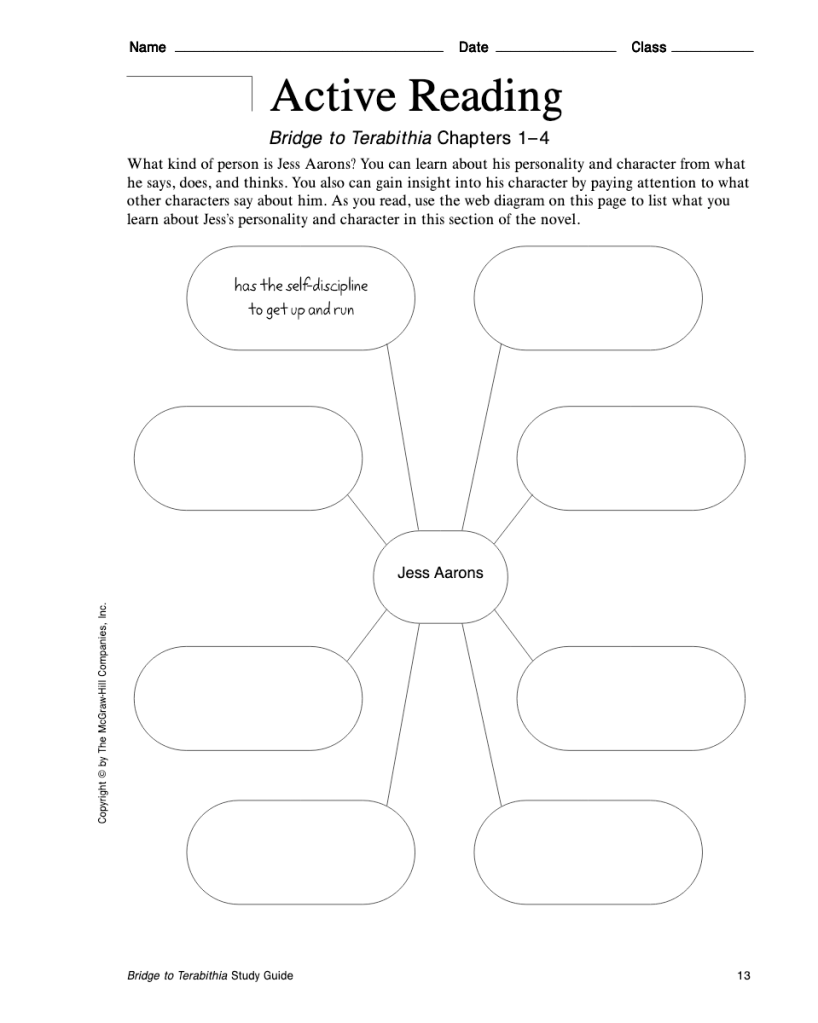
Complete a character diagram describing the personality and attributes of three main characters in the novel. Pick one of the characters and write a one page evaluation of how their personality and traits change or develop throughout the story. Provide specific examples of the events surrounding the character’s change.
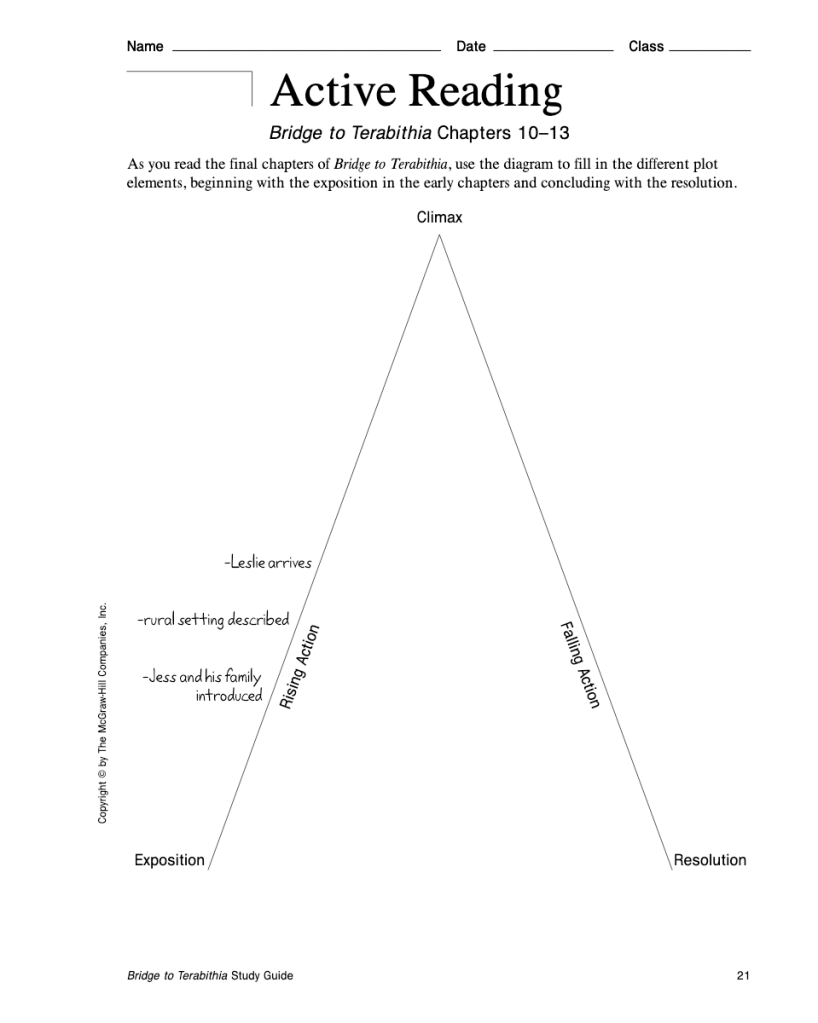
Create a Plot Triangle where you list the events during the exposition, rising action, climax, falling action, and climax of the story.
Resources
 Trisha's University Blog